


Focus on conserving migratory fish species and restoring their habitats
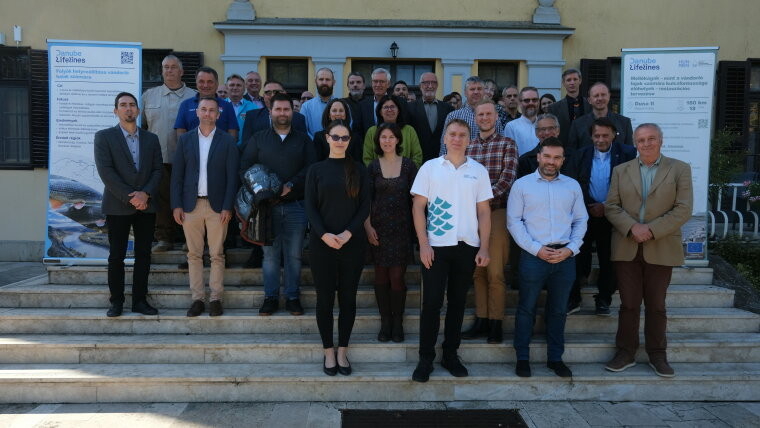
The joint thinking of experts, civil partners and decision-makers forms the basis for future developments within the framework of the Danube Lifelines HORIZON project. On October 29, 2025, the Hungarian opening speaker session of the Danube Lifelines HORIZON project and the subsequent professional workshop took place in the lecture hall of the HUN-REN Balaton Limnological Research Institute. The overall goal of the internationally significant program is to restore the natural water corridors of the Danube River Basin, remove obsolete dams, ecologically revitalize the shorelines, and improve the living conditions of migratory fish species throughout the entire river basin.
The central topic of the conference was the possibility of reconnecting the 1.5 km long Rábagyarmat backwater, which was separated in 1995, to the Rába River, which represents a milestone in restoring ecological connections in the habitat development aimed at strengthening the fish population of the Rába River. The initiative not only serves to protect the fish population and restore critical migration routes, but can also be the basis for a model nature-based water management development program that addresses social needs in line with nature conservation considerations.

The first speaker of the welcoming session was Zsolt V. Németh, State Secretary responsible for water management and Member of Parliament for the region , who highlighted: “The plans for the one and a half kilometer section can now be prepared, but in the future we will ensure that money is available for its implementation”, then added: the focus of DLL is the preservation of migratory fish species and the restoration of their habitats in the entire Danube river basin. His words confirmed that innovative, new solutions are needed in domestic water management, we can also say that an era change is taking place in water management. He highlighted: in the future, the focus will shift from flood protection to responsible management of water resources and all actors must adapt to the changed climate conditions and the sectors must work together to protect domestic water resources.
The project covers seven countries: Germany, Austria, Slovenia, Slovakia, Hungary, Romania and Bulgaria, on river stretches covering the upper, middle and lower parts of the Danube River Basin. The sites have been selected based on their ecological value – they can be points of restoration of valuable habitats and critical migration routes. The project contributes to the overall EU target of restoring at least 25,000 kilometres of aquatic ecological corridors by 2030.
Gábor Vasas, director of the HUN-REN Balaton Limnological Research Institute and scientific advisor, emphasized the scientific and community importance of restoring aquatic habitats in his welcoming speech.
The introductory lecture was given by Tibor Erős, head of the Fish and Conservation Ecology Research Group of the HUN-REN Balaton Limnological Research Institute (BLKI), and a member of the DanubeLifelines project management team . In his lecture, he presented the goals of the project and detailed the tasks planned in the Danube river basin. He highlighted the decisive role of joint thinking and planning in the restoration of wetlands. As he said, truly sustainable and long-term solutions can best be created when researchers, nature conservation experts, water policy makers, fish farmers and civil society organizations work together in dialogue from the earliest stages of planning.
As Tibor Erős put it: Of course, this requires a lot of time and energy from all stakeholders. However, such consensus-based restoration plans are much more likely to be accepted and supported by broad segments of society – and ultimately these are the projects that actually come to life in practice.
The rehabilitation concept of the Rábagyarmat backwater was presented by Attila Végh, ecologist of the Őrség National Park Directorate, with a focus on "Reconstruction for nature conservation purposes", detailing the restoration of natural shore conditions and the revitalization of wetlands.
In the professional section of the event, special attention was paid to the examination of the navigability of the Danube catchment, in a separate section. The presentations, from the exploration of migration barriers to the presentation of restoration options, provided a comprehensive picture of the current situation of the river system and its future development directions. Marcell Szabó-Mészáros, a scientific associate at the Department of Hydraulic Engineering and Water Management of the Faculty of Civil Engineering of the Hungarian University of Technology, examined the navigability and fish migration conditions of the Danube section between Gönyű and Budapest. In the continuation , Szilvia Dávid, representing the OVF, presented the practical aspect of navigability examinations and development expectations related to the European Union Nature Restoration Regulation, pointing out the strategic importance of main-stream rehabilitation and improving habitat connections.
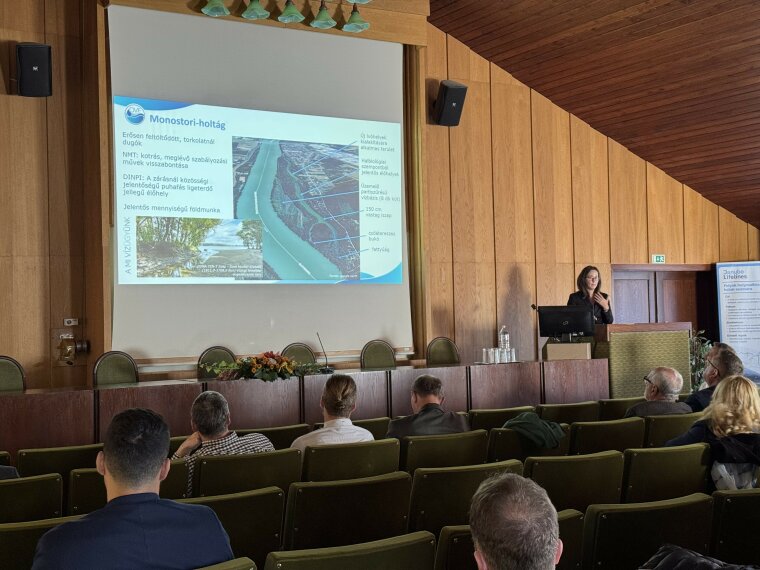
Then, Ágnes Tóth Takácsné , also from OVF, focused on the revitalization opportunities of the tributaries, emphasizing the need to coordinate river dynamic interventions and habitat rehabilitation. Afterwards, the participants were able to learn about the experiences of the WWF regional “Living Rivers” program, interpreted by Szilvia Ádám , who presented the lessons learned, difficulties and innovative solutions of the restoration projects so far. To close the morning session, Balázs Tóth, hydroecological supervisor of the Duna-Ipoly National Park Directorate, presented the nature conservation dilemmas and management aspects of the Danube tributary systems, highlighting the challenges of creating a responsible balance between nature conservation, water management and community use goals.

The afternoon professional block continued with presentations by fishing organizations and fish management experts. The section was opened by Ivancsóné dr. Zsuzsanna Horváth, vice-president of MOHOSZ, and executive president of the Győr-Moson-Sopron County Association of Sport Fishing Associations , who highlighted that in the management of the Danube and its branch system, nature conservation goals and fishing utilization can be successful in harmony with each other. She presented in detail their organization and the experiences of utilizing the branch system, the unique fishing tourism significance of the region and the future habitat development directions.
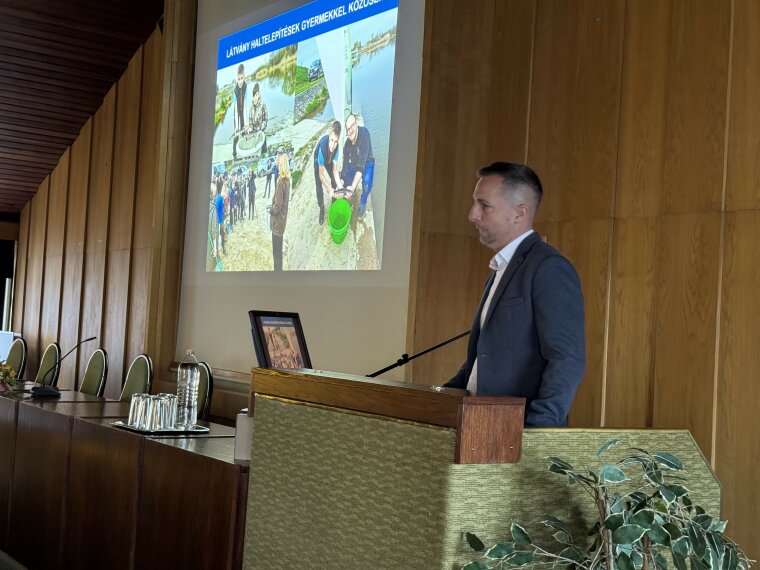
In the continuation , Zsolt Osvald, the executive director of the Komárom-Esztergom County Association of Fishing Associations, presented the importance of fish farming and the development vision of the northern sections of the Danube, emphasizing and demonstrating with numerous examples the importance of youth and the education of new generations, which is one of the fundamental pillars of the protection of the natural values and fish stocks of the Danube.

Afterwards , Tibor Dudás, executive director of the Association of Hungarian Capital Fishing Associations , summarized the experiences of the capital region on the utilization of the Danube for fish farming and its future objectives, highlighting the difficulties in fishing and fish habitat protection resulting from extremely intensive shipping problems, as well as his positive and negative experiences in the reduction of cormorants, which highlighted how often protected, valuable fish species are also targeted by these birds, so that not only the fish stock for fishing purposes is endangered by the excessive presence of these birds in natural living waters.
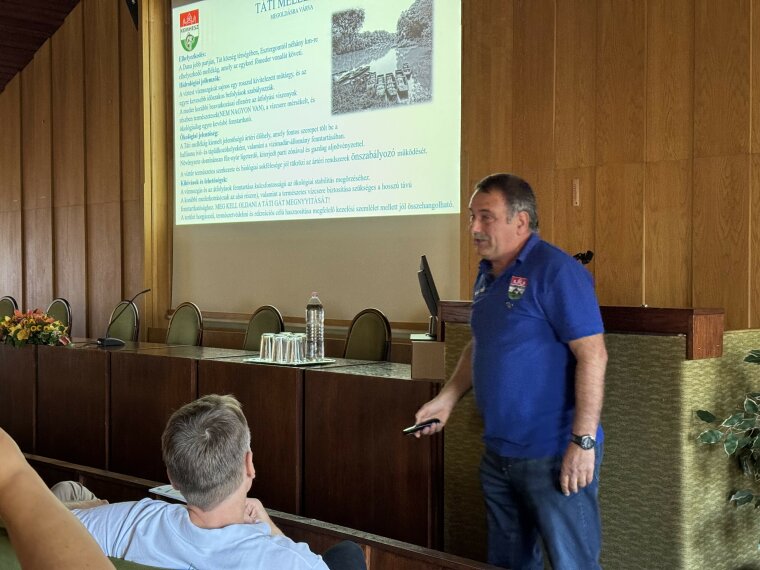
In the closing block of the professional presentations on fishing, Norbert Puskás, Vice President of MOHOSZ and Executive President of the project partner SHE‑K Vas County Association, presented the utilization experiences of the Vas County section of the Rába River, as well as the habitat development concept of the Rába and its tributaries. In his presentation, the results achieved by the Vas County Association of Sport Fishing Associations, as well as the fishing and fishing tourism project experiences, were emphasized. He highlighted that it is now a clear social and fishing community expectation that the protection and development of the state of natural watercourses and fish spawning grounds should not only be a theoretical goal, but also show progress in reality through tangible interventions.
He addressed the organizational and professional actors present, emphasizing the importance of cooperation between the water management, nature conservation and fishing sectors. He pointed out that although these fields may use different approaches, real and lasting results in the protection of natural waters in this area can only be achieved through joint work and cooperation, as changing climate conditions force all actors to adapt. At the end of the presentation, he specifically addressed the habitat development directions related to the MAHOP Plusz program in the Vási waters. He outlined that there is a realistic chance that a tender could be prepared on the Rába River, and even on the Kis-Rába, for habitat rehabilitation interventions such as reconnecting old backwaters and creating new or revitalized spawning grounds. The Nicki backwater and the Kis-rába backwaters may be submitted in the first round, but several backwaters are also “on the table”. He expressed his special pleasure in connection with the international support received for the rehabilitation planning of the Rábagyarmati backwater, which was preceded by long and persistent professional work. He thanked the Balaton Limnological Research Institute and the Őrség National Park Directorate for the professional partnership, highlighting that following the joint field visits and consultations carried out in the summer of 2024, the project, which was previously only a dream, has now reached a level of preparation that can be implemented as a licensed development supported by a water law plan within a few years. In parallel with the preparation of the plans and the licensing process, we must now work to jointly map out and find the tender and other financial sources that will ensure its implementation, so that the project can enter the actual implementation phase with the greatest possible chance.
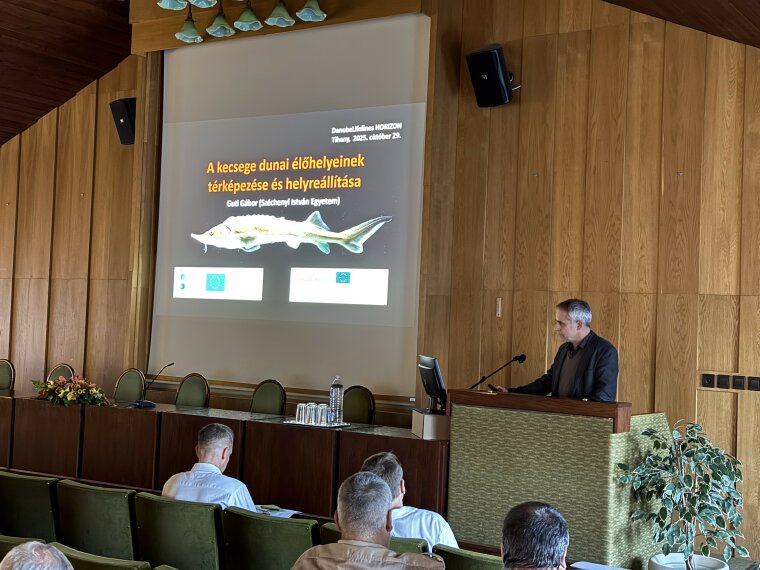
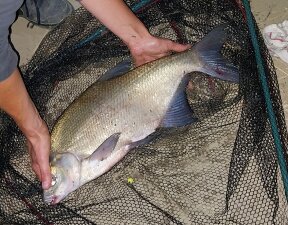
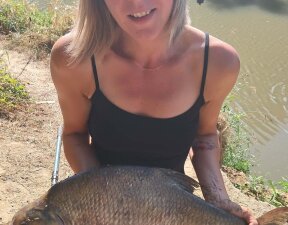
The closing presentation of the professional day focused on one of the most iconic native species of the Danube, the bream. Gábor Guti, senior research fellow at the Department of Applied Sustainability at Széchenyi István University, presented the mapping of the fish species' Danube habitats, its conservation status, and future opportunities for habitat reconstruction.
At the workshop following the presentation session, Tibor Erős presented the landscape planning options related to habitat development, and the participants then discussed the conflicting issues related to these. At the end of the day, the participants left with the affirmative professional and community message that the protection, restoration and promotion of the Danube and Rába habitats, as well as the fish population, can be achieved in the future through real actions – in partnership between nature conservation, science and the fishing community. The basis for future habitat development along the common goals is the balance of sustainability, partnership and ecological approach. The closing speech thus also marked the beginning of a responsible vision of the future.