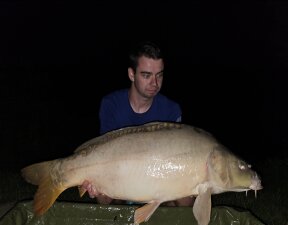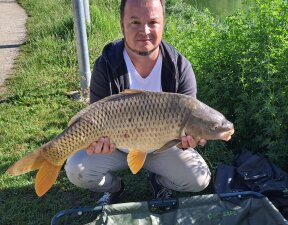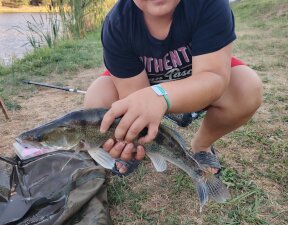



We save fish wherever we can...
With the help of our professional and community fish guards, volunteer fishermen, and local residents concerned about nature and fish stocks, the rescue of endangered fish stocks and the collection of dead fish have taken place and are currently taking place in several locations.
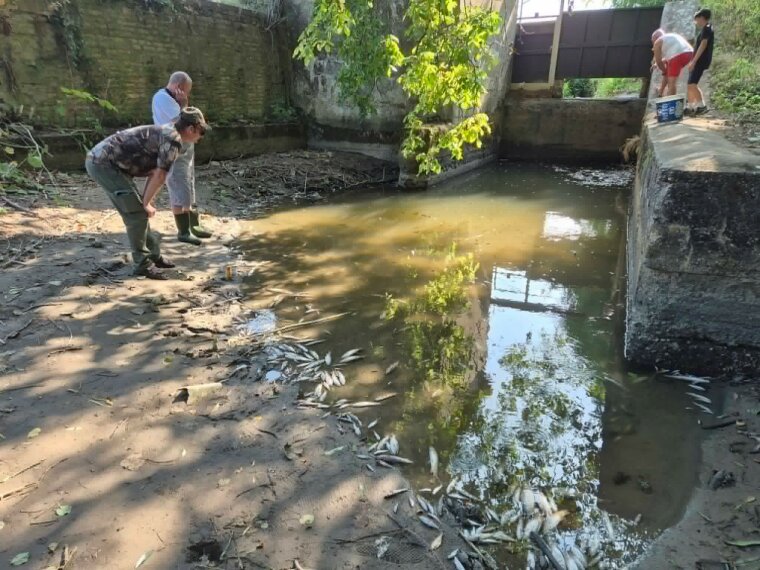
Our staff continuously monitor the condition and water levels of endangered still waters and streams, and where necessary, assess the professional and practical possibilities of fish rescue. In the case of several smaller streams and streams, we attempted to rescue and safely place fish trapped in so-called "pools" in sections still covered with water.
However, it is important to know that fish rescue is not simply about moving fish from one body of water to another. Fish management and conservation regulations set strict conditions for, among other things, rescuers, equipment, transport, receiving water area, and the management of alien and invasive species.
We greatly appreciate and thank the local population for their willingness to help. However, we ask everyone not to start saving fish on their own without professional advice. Transplanting a specific river fish species into a lake in many cases does not mean real saving, and moving an invasive species – such as the American signal crayfish – to another body of water can be downright harmful.
If anyone notices a fish population in danger, please first contact our Association's professional fish keepers using the contact details on our website. The goal is common: where professionally and legally possible, save the fish, but without endangering another aquatic habitat.
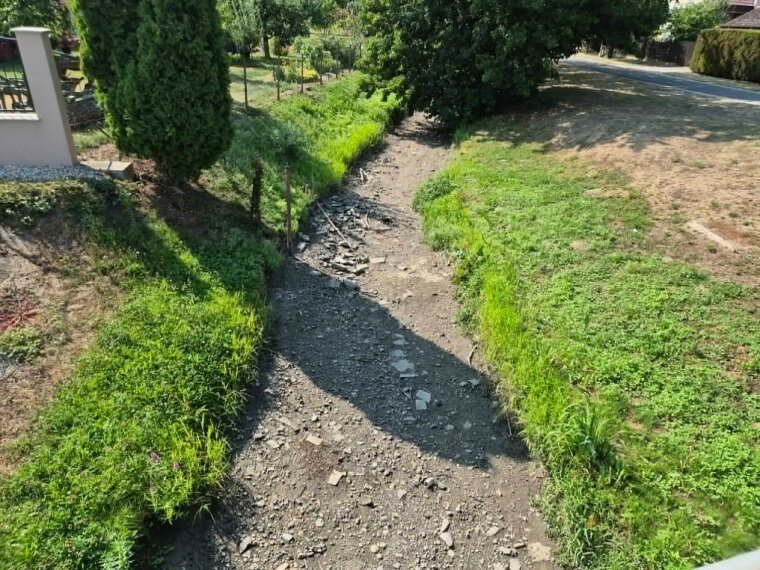
Unfortunately, there are also small watercourses that have dried up temporarily or permanently in recent years, and some of their sections have practically ceased to exist as wetlands. It is particularly worrying that water bodies that were previously considered stable and provide habitat for significant native fish species, including protected ones, have now reached a critical state.
Despite the very low water levels, the Pinka and Répce rivers are still "holding on" for the time being, but in recent days the section of the Gyöngyös stream below Táplánszentkereszt has practically dried up.
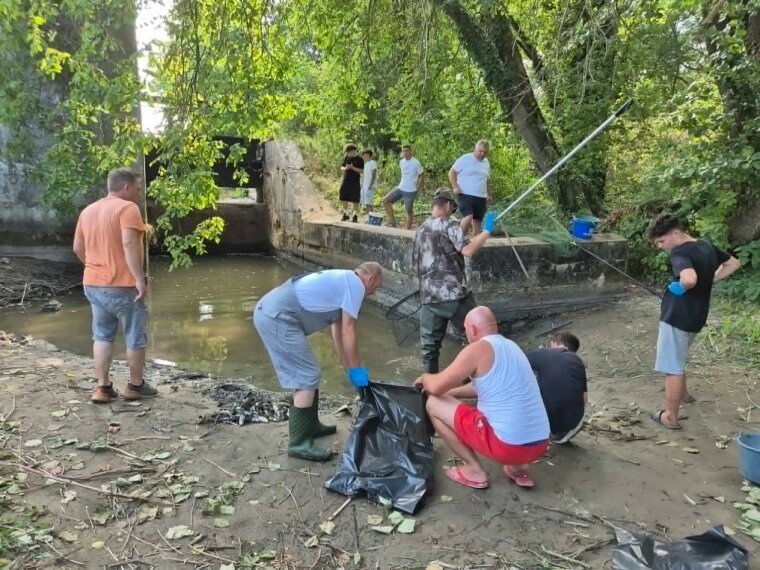
The local population - after a telephone consultation with our fish wardens - has already begun rescuing the distressed fish stock, which was joined by our Association's staff and volunteers on Friday.
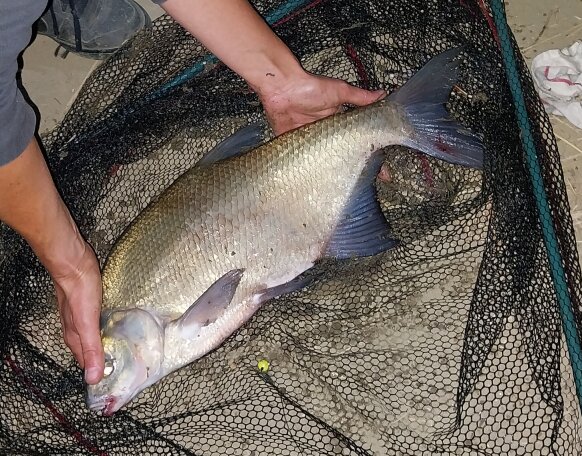
The severity of the situation is clearly demonstrated by the fact that nearly 50 kilograms of dead fish had to be collected. Most of these were chub, mullet, bream and bottom-dwelling pike, typical of Gyöngyös, but there were also specimens of other catchable and protected species among them.
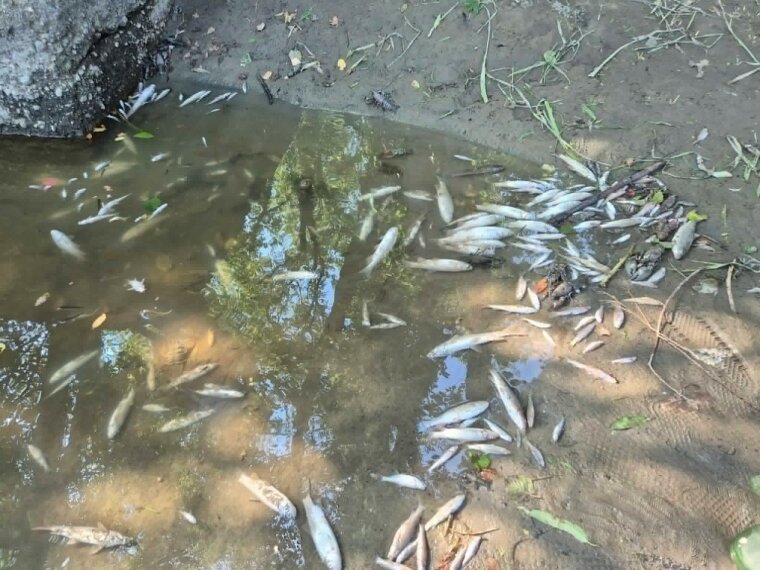
Fortunately, we managed to intervene in time in the section under the Vasszécsenyi mill and were able to rescue a significant number of live fish. We took care of the proper placement of the rescued fish and the removal of the collected dead fish together with local helpers.
Since we unfortunately cannot thank all contributors by name, we would like to express our special thanks to our fellow anglers Zoltán Farkas and Tamás Farkas, as well as the volunteers from Vasszécsenyi, who, under the leadership of Mayor Zoltán Zsolnai and Miklós Pék, did a lot to mitigate the damage and preserve the fish stocks that could still be saved.
Thank you to everyone who contributes to the protection of our waters and fish stocks through work, reporting or volunteering in this extremely difficult situation!
Finally, we once again ask fishermen and local residents concerned about the fate of fish stocks to report the problem directly to our Association or professional fish guards, if they notice fish stocks in danger and in need of rescue, rather than on social media. This way, we can follow up on the report as quickly as possible, assess the situation, and where possible, take appropriate action.